Introduction
Disposable shop gloves are one of those workshop supplies that are always needed and always in the way. The cardboard box they arrive in tears at the opening, collapses after a few weeks, soaks up dust and moisture, and eventually dumps a wad of gloves on the floor when you pull too hard. Gloves stored loose in a drawer fare no better: they collect sawdust, get snagged on tools, and come out wrinkled and hard to put on.
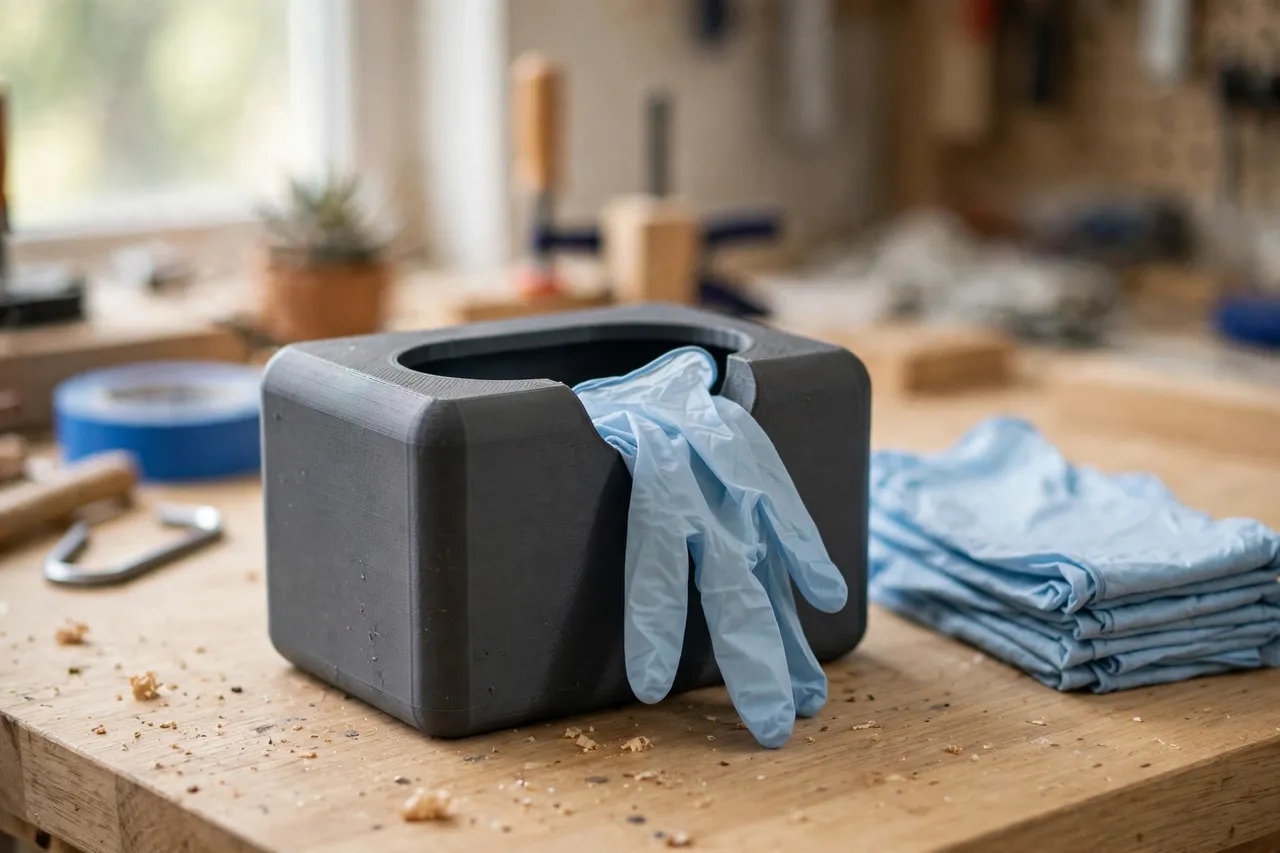
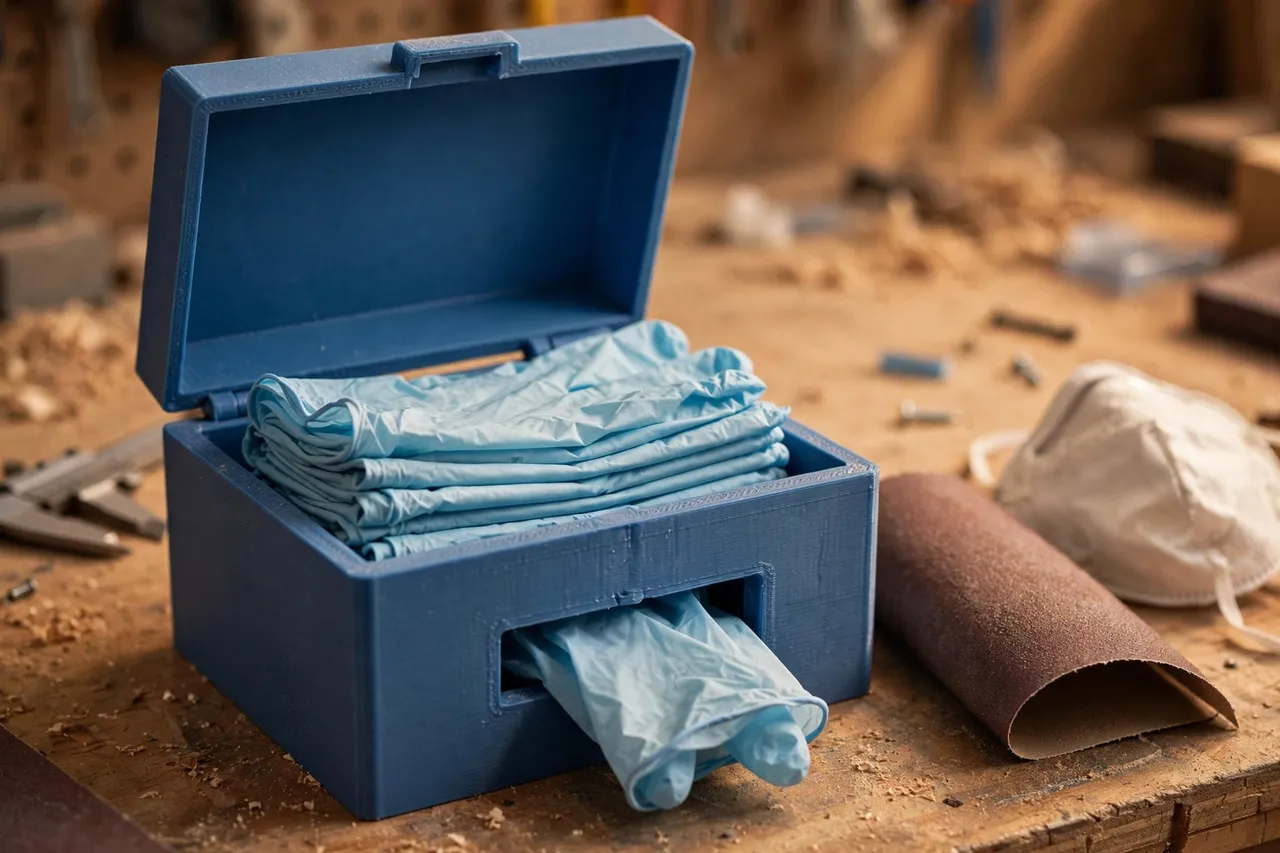
A 3D printed glove dispenser box solves the storage problem, not the glove problem. It is a sturdy lidded box with a shaped opening that lets you pull one glove at a time while the rest stay stacked, clean, and dust-free inside. It organizes and protects gloves; it does not make gloves safer, cleaner for any particular task, or suitable for work they were never meant for. Choose the right glove for the job on its own merits, and use the dispenser simply to keep that glove clean and handy.
What You Need
A glove dispenser is a medium-sized box print, usually split into a base and a lid so it fits on a typical home printer. No electronics, no moving parts, and no special hardware are involved.
Materials and tools
- A home 3D printer with a build area of at least 180 mm in one direction, or a design split into panels
- PLA filament for indoor bench use, or PETG for a garage that gets warm
- A sample glove, unfolded and measured flat, plus a ruler or calipers
- A screwdriver and two short screws, only for a wall-mounted version
- Sandpaper or a small file for smoothing the dispensing slot edges
- Optional: small magnets or a printed latch tab to keep the lid closed
The key measurement is the glove’s folded size. Gloves are usually stored folded in half or in quarters; measure the stack as you intend to load it, not the glove stretched flat. A typical folded disposable glove stack is roughly 120 to 140 mm wide and 200 to 240 mm long, but brands differ, so measure yours.
Suggested print settings
- Layer height: 0.20 mm; 0.24 mm is fine for the large flat walls of the box.
- Walls: 3 to 4 perimeters, so the slot edges stay rigid when you pull a glove through.
- Infill: 15 to 25 percent, grid or gyroid. The box holds light gloves, not weight.
- Top and bottom layers: 4 or more, for a smooth base and a lid that sits flat.
- Orientation: Print the base upright and the lid flat or upright, depending on your design; keep the slot edges away from support-heavy overhangs.
- Supports: Minimal — design the lid overhang and slot with chamfers so supports are rarely needed.
Print the slot section as a test first. The slot is the whole mechanism, and its size determines whether gloves come out one at a time or in clumps.
Design Considerations
A dispenser box has three jobs: hold a stack neatly, present one glove through an opening, and refill easily. Each feature serves one of those jobs.
1. Box size and stack capacity
Size the interior to your folded glove stack plus about 5 mm of clearance on each side. Too tight and gloves bunch and tear on the way out; too loose and the stack shifts, so the top glove no longer lines up with the slot. Capacity of 20 to 40 gloves is a good target for a bench box — enough to last between refills without becoming a bulky crate. The dispensing slot
The slot is the most important detail. A simple wide oval or rounded rectangle, roughly 60 to 90 mm long and 20 to 30 mm wide, works for most disposable gloves. The trick is friction: the slot should grip the glove just enough that pulling one glove drags the next one partway into the opening, ready for the next pull — the same staged effect as a tissue box — without dragging out three at once. Rounded, smooth slot edges are essential; sharp printed edges catch and tear thin gloves. Chamfer or fillet every slot edge in the model, then sand it smooth after printing.
3. Lid and refill access
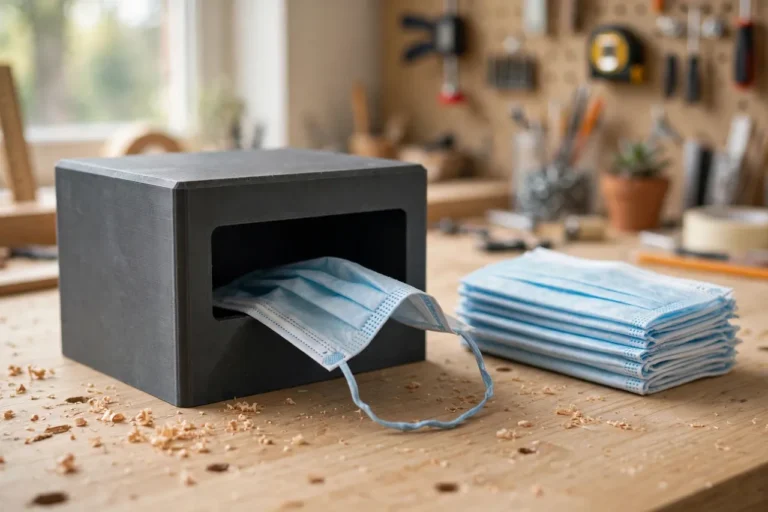
A hinged or lift-off lid makes refilling painless. A lift-off lid with a small lip is simplest and prints reliably; a hinged lid with printed pins is tidier but needs accurate pin holes. Either way, the lid should stay put during a firm pull. A pair of small embedded magnets, a friction lip, or a simple latch tab all work. Avoid a lid that lifts off with the glove — that defeats the purpose. This kind of easy-refill thinking also shows up in 3D Printed Dust Mask Dispenser: Masks Dispensed Cleanly, a companion organizer for the same bench area.
4. Mounting options
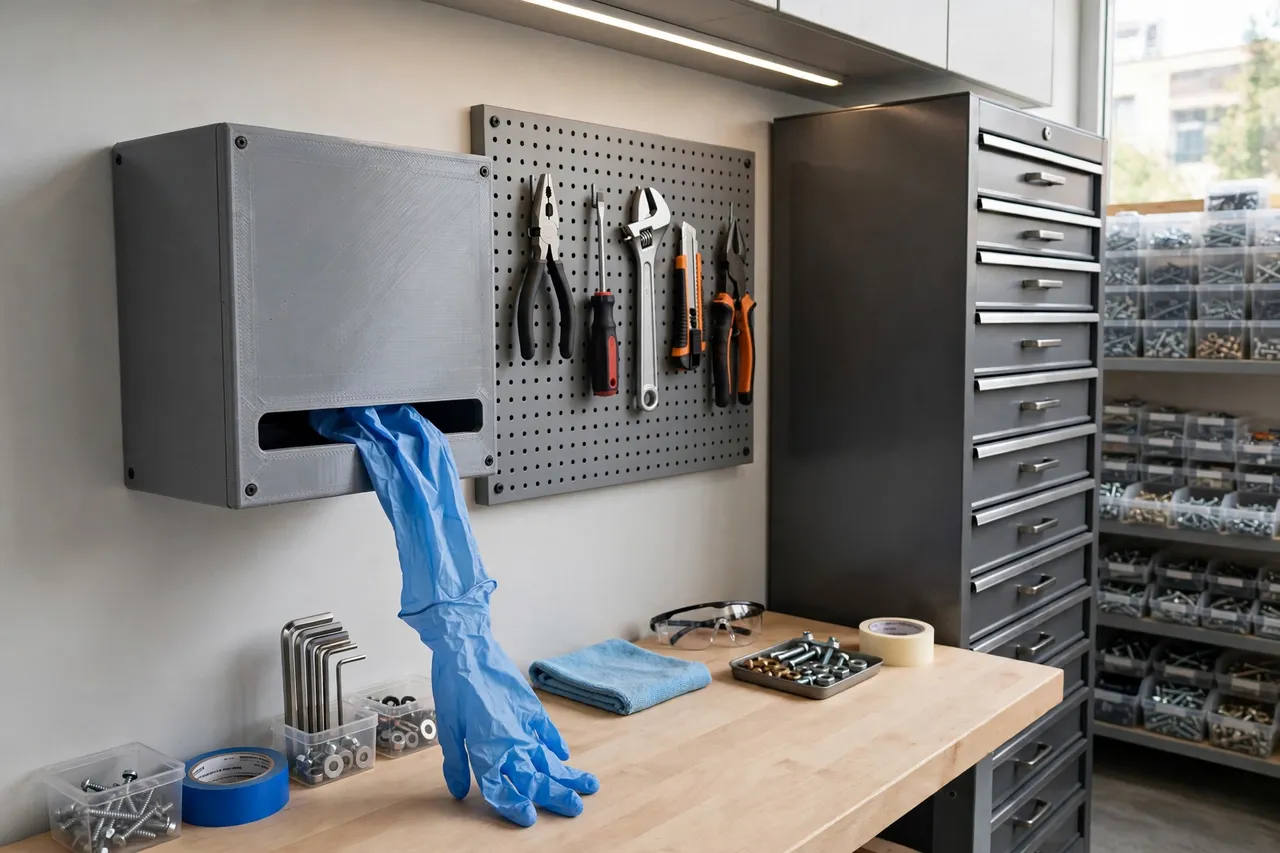
A bench box needs a flat base and, ideally, a non-slip pad underneath so it does not slide when you pull. A wall box needs keyhole slots or screw holes in the back panel and should sit at hand height near the bench or the finishing area. If you mount it, keep the slot facing slightly downward or outward so gravity helps present the next glove, and keep the box away from direct dust sources like a sander station.
Step-by-Step: Printing and Assembly
- Measure your gloves. Fold a glove the way you will store it and measure the stack’s width, length, and height per ten gloves.
- Decide capacity. Multiply stack height by your target count, then add lid clearance.
- Model the base. An open-top box with interior clearance of about 5 mm around the stack, walls 3 to 4 mm thick, and a flat base.
- Model the lid with the slot. Size the slot from the test guidance above, with fully rounded edges.
- Print a slot test piece. A small plate with your slot shape lets you test pull behavior with real gloves before committing to the full box.
- Adjust the slot. Too many gloves at once means a narrower slot; tearing means smoother, rounder edges or a slightly wider slot.
- Print the full base and lid. Clean up edges, especially around the slot, with fine sandpaper.
- Fit the lid. Check that it seats firmly, stays on during pulls, and lifts off easily for refills.
- Add mounting or grip. Felt pads for the bench, or screws for the wall, depending on your version.
Step-by-Step: Using It
- Load gloves folded the same way every time. Consistent folding keeps the stack even and the top glove aligned with the slot.
- Place the first glove’s cuff through the slot when you load the box, so the first pull is ready immediately.
- Pull slowly and steadily. A smooth pull brings one glove out and stages the next; a yank drags out a clump.
- Refill before the box runs empty. Refilling a half-full box is easier than restacking from zero, because the remaining gloves hold the new stack in shape.
- Keep the box where gloves are used. Near the finishing bench, the painting area, or the garden potting station — not in a distant cupboard.
- Wipe the outside occasionally. Dust on the box eventually finds its way to the slot, so a quick wipe keeps dispensed gloves clean.
Tips for Better Results
- Print the box in a light color. It is easier to see how many gloves remain through a light-colored wall or by lifting a light lid.
- Add a viewing window. A narrow vertical slot in the front wall shows the stack level at a glance without opening the lid.
- Label the glove size on the lid. A small embossed size marking stops someone loading the wrong size into the box.
- Match the slot to one glove type. A box tuned for thin nitrile gloves will not dispense thick reusable gloves well; print a separate box if you stock both.
Common Mistakes to Avoid
- Making the slot too large. A generous slot feels safer during design but dispenses three gloves at once in practice.
- Leaving sharp slot edges. Thin gloves tear on even slightly rough printed edges — sand and test.
- Sizing from the box label instead of the gloves. Stated glove sizes describe the hand, not the folded stack; measure the real folded stack.
- Building a box that is hard to refill. If refilling is a chore, the box ends up empty and gloves go back to the drawer. A lift-off lid beats a clever latch you dread opening.
- Forgetting that this is storage, not protection. Do not present the dispenser as keeping gloves sterile, clean-room ready, or safe for a task they are not rated for. It keeps them tidy and dust-free on the bench — that is its job, and it does it well.
Care, Storage, and When to Choose an Alternative
Wipe the box with a damp cloth when dusty, and keep PLA boxes out of hot cars and direct sun. If the slot wears or a lid tab breaks, reprint just that part — the modular base-and-lid design makes repairs cheap.
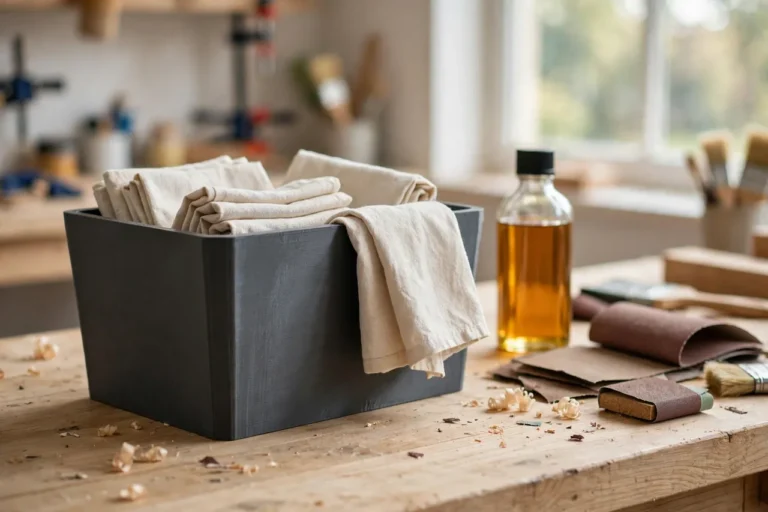
Choose a different solution if you need gloves in a truly dusty or wet environment: a sealed container with a tight lid protects better than a dispensing slot, at the cost of one-at-a-time convenience. For a normal workshop, garage, or garden shed, the dispenser box is the right balance, and it sits naturally alongside other bench organizers such as 3D Printed Rag Bin: A Bin for Shop Rags for a cleaner, more organized workspace.
FAQ
Will this box fit any brand of disposable glove?
It fits the gloves you design it for. Folded sizes vary by brand and thickness, so measure your usual gloves and size the interior and slot to them. If you switch brands, check the fit — a quick slot test piece tells you whether the new gloves dispense cleanly.
Can I use it for reusable work gloves?
Not well. Thick reusable gloves do not fold into a neat stack or pull through a slot designed for thin disposables. This box is for thin disposable gloves; reusable gloves belong on a hook or in a bin.
How do I stop multiple gloves coming out at once?
Narrow the slot slightly, smooth its edges, and pull more slowly. Also check your folding: gloves folded inconsistently tangle and drag each other out. Uniform folding is half the fix.
Is the dispenser suitable for medical or food-handling gloves?
No claims are made here about medical, food-handling, or any safety-critical use. This is a workshop storage organizer for general shop gloves. For any regulated or safety-critical task, follow the glove manufacturer’s guidance and your workplace rules, not a storage box.
Conclusion
A glove dispenser box is a modest print that removes a daily annoyance. No more torn cardboard boxes, no more dusty gloves from a drawer, no more wrestling a wad of gloves apart with dirty hands. It is a small upgrade that pays for itself in saved frustration within the first week.