3D Printed Sliding Bevel Gauge: Copy Any Angle and Transfer It Anywhere
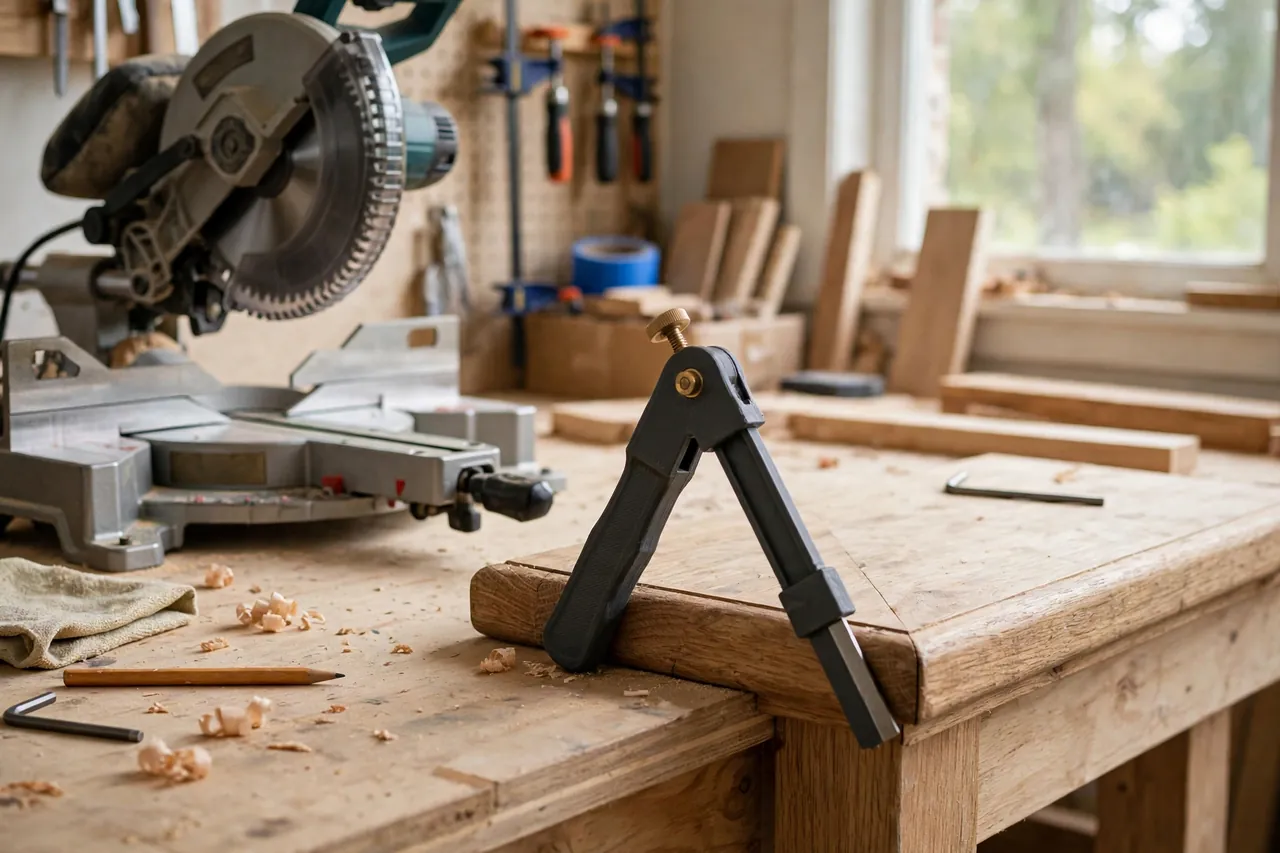
A bright home workshop scene with a matte charcoal-gray 3D printed sliding bevel gauge opened against the corner of a wooden stair tread

Introduction Real houses are full of angles that are almost — but not quite — what they should be. The corner that should be 90 degrees is 88. The stair stringer that should match the standard pitch does not. Measure with a protractor, do the arithmetic, set your saw by numbers, and the trim still … Read more
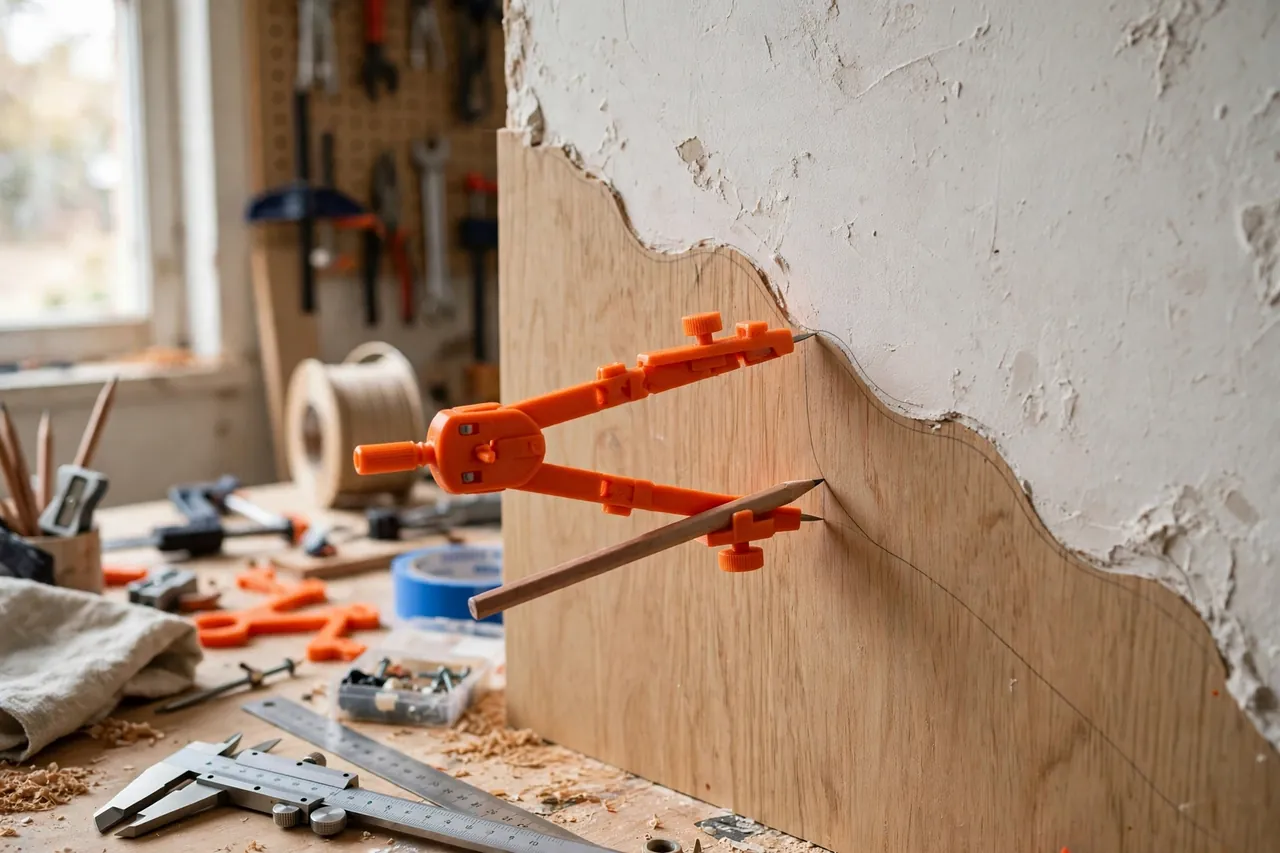
3D Printed Scribing Compass: Fit Cabinets, Counters and Panels Tight to Wavy Walls

A bright home workshop scene with a matte orange 3D printed scribing compass tracing along a wavy plaster wall edge onto a light oak cabinet side

Introduction Walls are not straight. Plaster waves, corners bow out, and old houses add a century of small movements. Your cabinet, counter, or panel, on the other hand, arrives with a beautifully straight edge. Push the two together and you get a tapering gap that collects dust, catches the eye, and makes careful work look … Read more

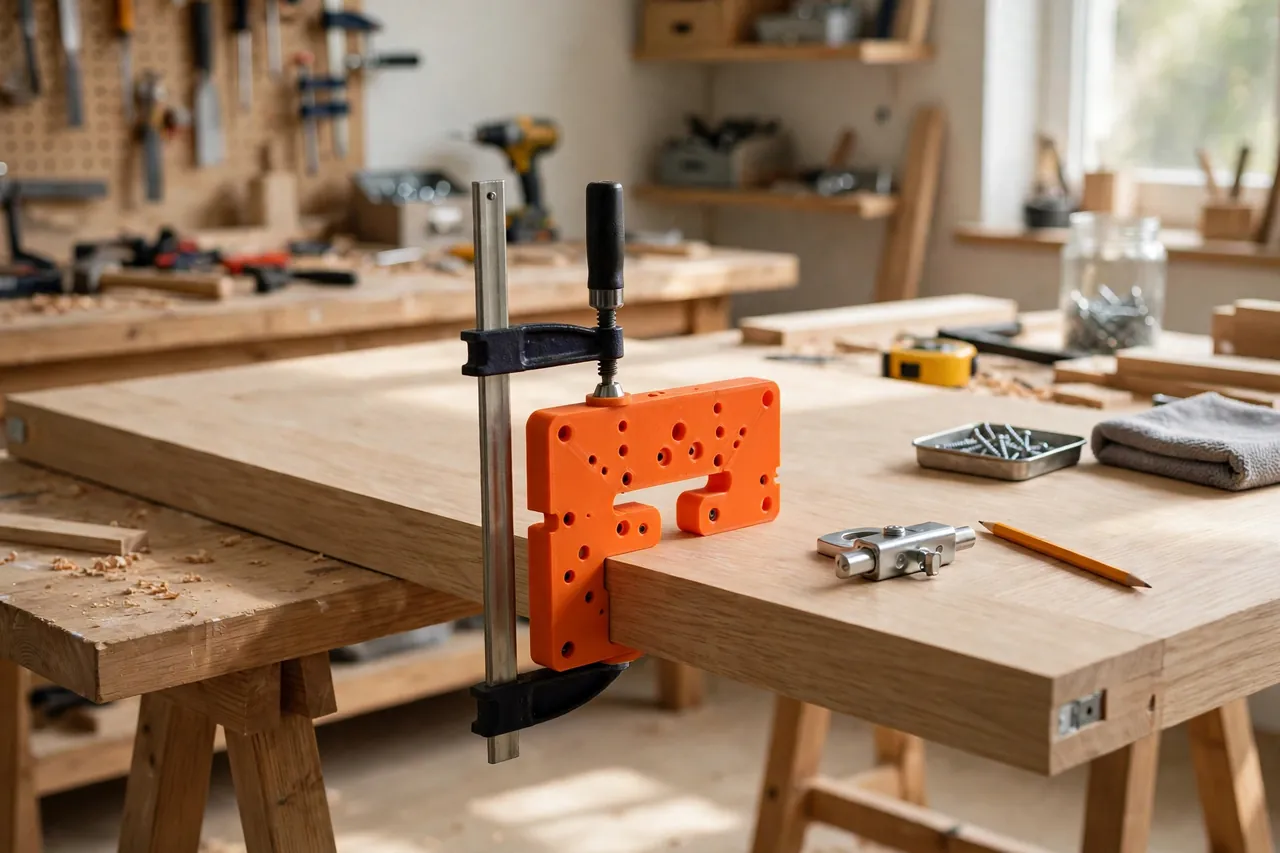
3D Printed Door Latch Marking Template: Fit a New Latch Without Chisel Guesswork

A bright home workshop scene with a matte orange 3D printed door latch marking template clamped over the edge of a light oak door slab on trestles

Introduction Fitting a tubular latch looks simple on the packet: drill one big hole through the door face, one smaller hole into the edge, chisel a shallow recess, done. In practice, the edge hole wanders, the faceplate recess ends up too deep on one corner, and the latch sits slightly twisted — so the door … Read more

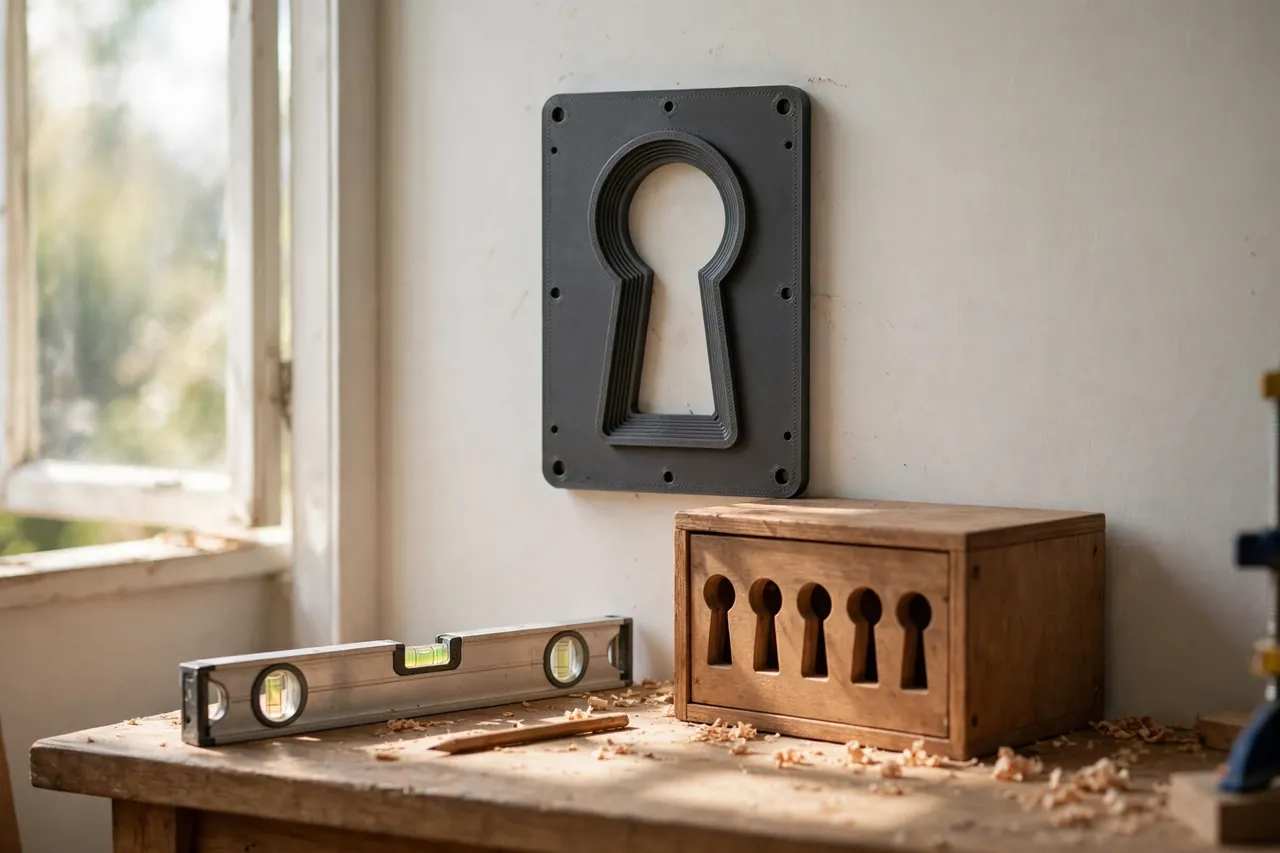
3D Printed Keyhole Marking Template: Hang Cabinets and Shelves Level the First Time

A bright home workshop scene with a matte charcoal-gray 3D printed keyhole marking template pressed against a pale wall above a wooden workbench

Introduction Keyhole hangers are a brilliant idea with one maddening flaw: the slots hide on the back of the cabinet. You cannot see them, you cannot easily measure them, and the wall screws have to land within a millimeter or two of a slot you are guessing at. Miss, and you are patching holes and … Read more