3D Printed Zero-Clearance Insert Template: Make Inserts That Fit Your Saw

A bright home workshop scene with a table saw

Introduction A zero-clearance insert is one of the highest-value upgrades for a table saw. The stock throat plate leaves a wide gap around the blade; thin offcuts drop into it, small pieces tip into it, and the unsupported wood fibers at the cut tear out. A zero-clearance insert closes that gap to the blade’s own … Read more
3D Printed Dado Width Gauge: Set Your Dado Stack to the Exact Width

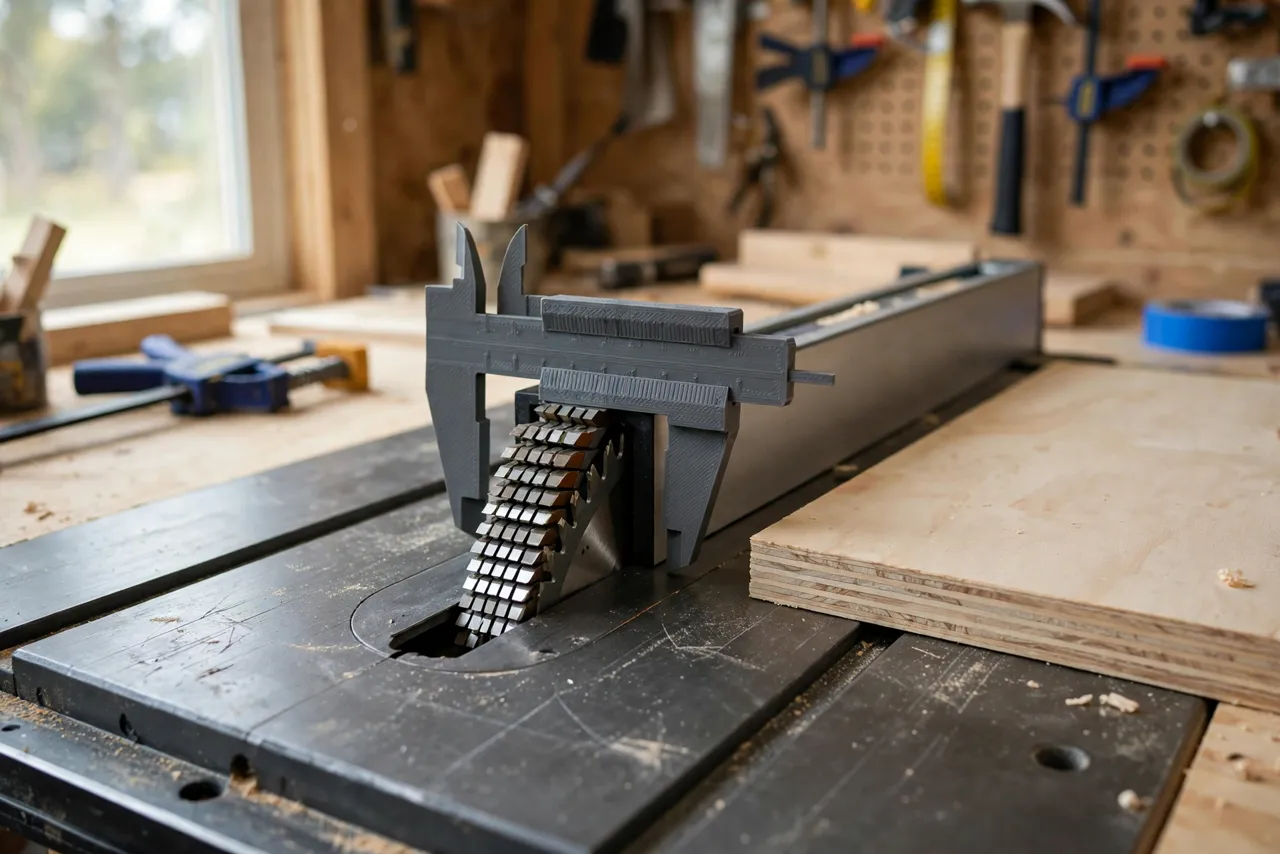
A bright home workshop scene with a table saw

Introduction Setting up a dado stack is a trial-and-error tax every woodworker pays. You stack blades and chippers, guess at shims, make a test cut, measure it, and adjust — usually two or three times before the dado matches the shelf thickness. Each test cut eats a piece of plywood and a chunk of patience. … Read more

3D Printed Groove Cutting Jig for Drawer Bottoms: Grooves That Fit the Panel

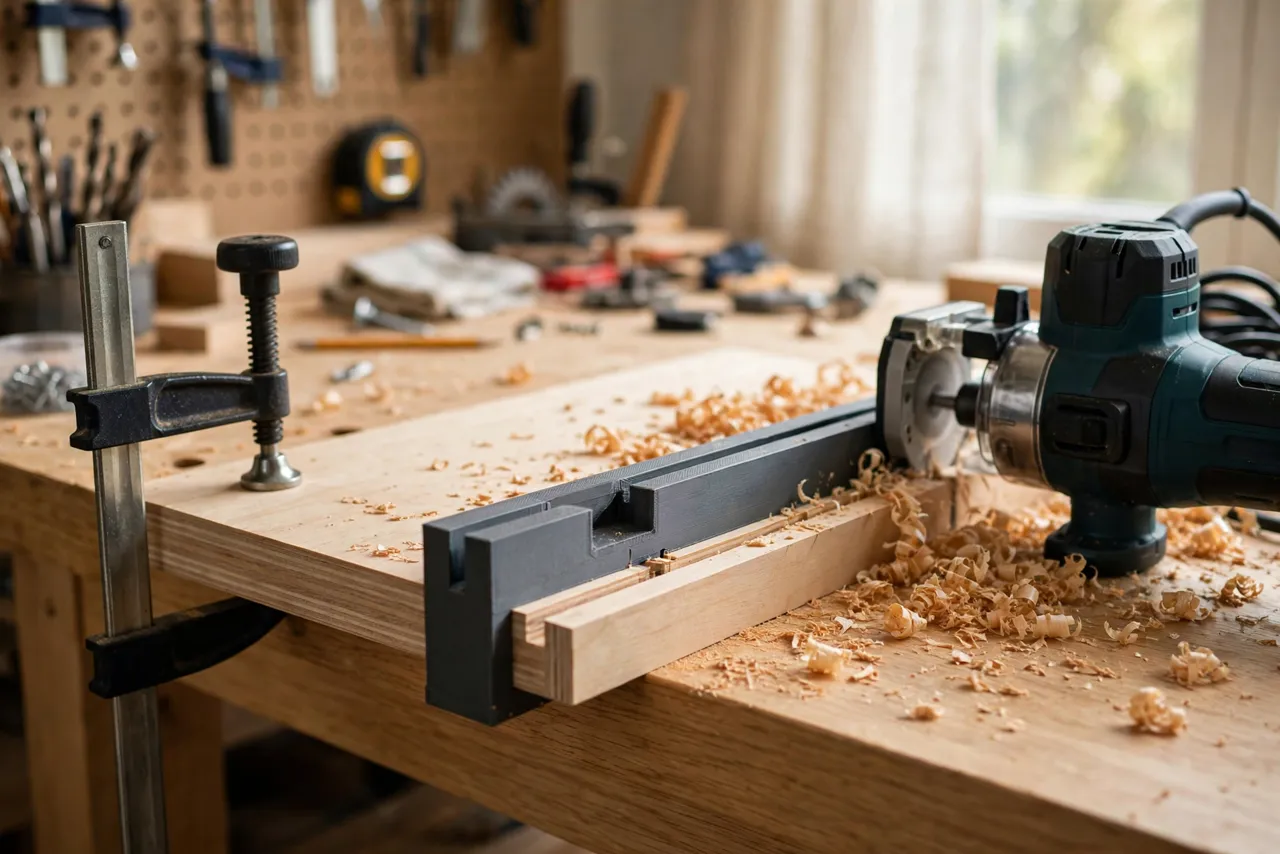
A bright home workshop scene on a light oak workbench

Introduction A drawer bottom that fits is a quiet pleasure: the panel slides into its grooves on all four sides, sits flat, and never rattles. A drawer bottom that does not fit is a familiar annoyance — a groove too shallow lets the panel pop out, a groove too wide lets it rattle, and a … Read more

3D Printed Angled Hole Drilling Guide: Drill Clean Holes at Any Angle

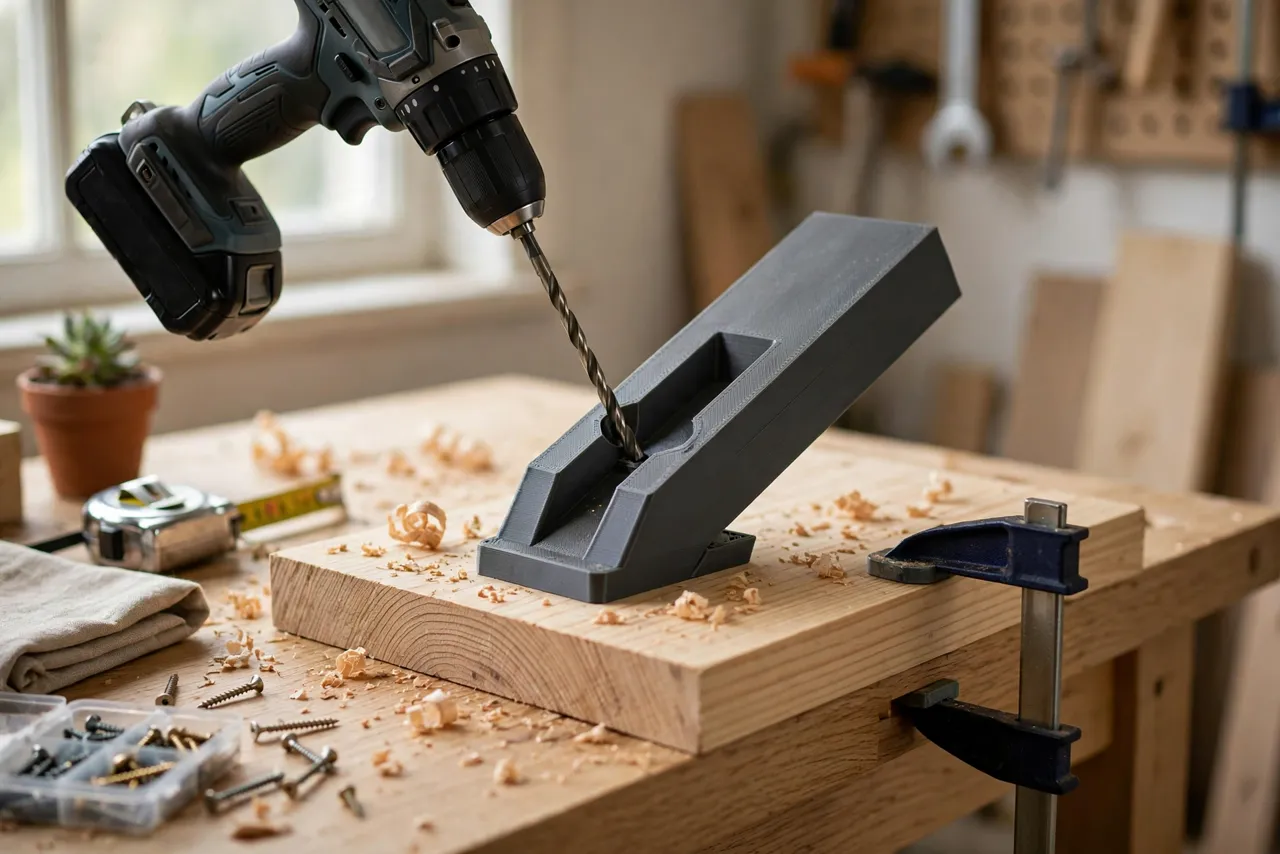
A bright home workshop scene on a light oak workbench

Introduction Straight holes are easy. Angled holes are where freehand drilling falls apart: the bit skates across the surface, wanders off line, and exits somewhere you did not plan. Angled dowel joints, splayed legs, repaired chair rungs, and pocket-style screw joints all need holes that start exactly where intended and hold their angle all the … Read more

3D Printed Bandsaw Circle Cutting Jig: Cut Perfect Discs on the Bandsaw

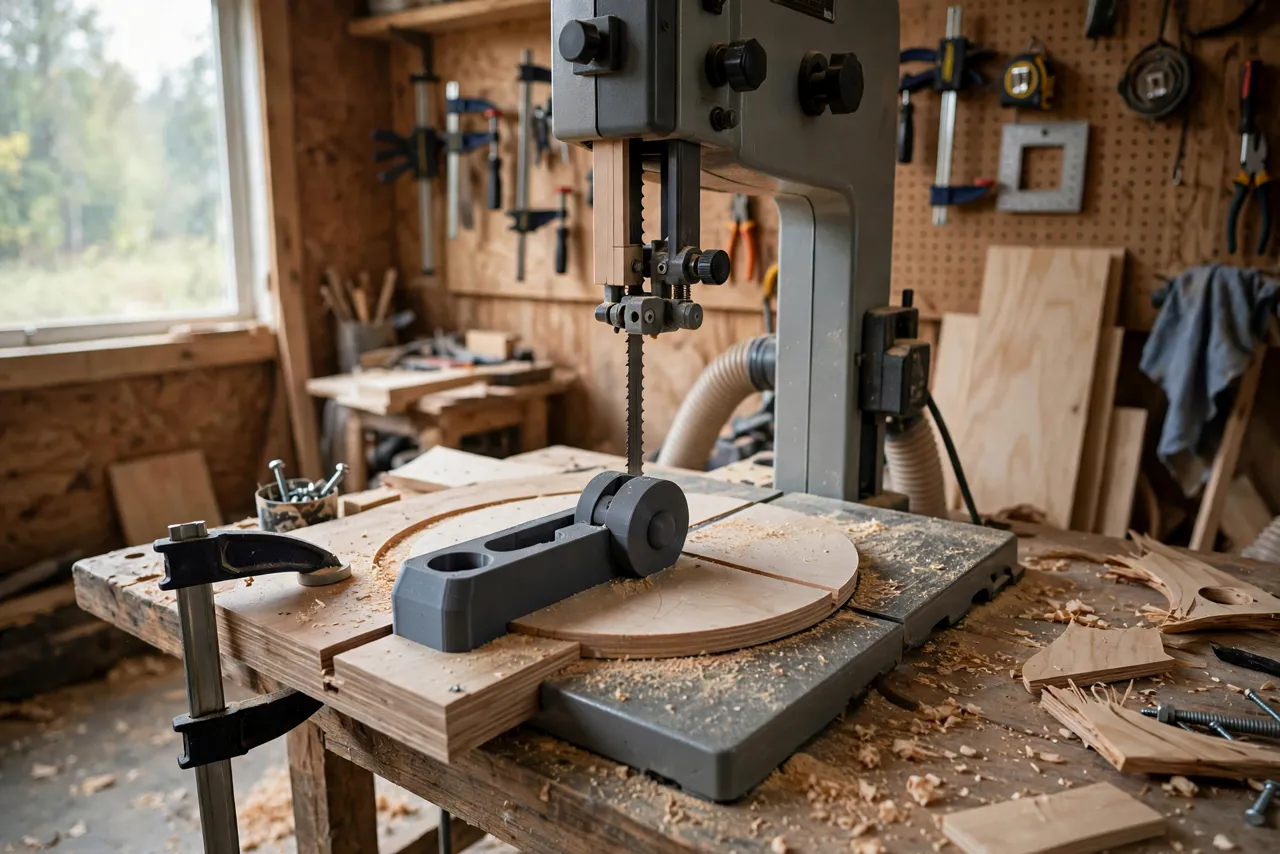
A bright home workshop scene with a bandsaw

Introduction Cutting a circle freehand on a bandsaw is an exercise in frustration. The blade wanders, the curve flattens in places, and the result needs so much sanding that it ends up smaller — and still not round. Round table tops, clock faces, lazy Susan discs, and stool seats all deserve better. A circle cutting … Read more

3D Printed Miter Saw Length Stop System: Repeatable Cuts Without a Tape

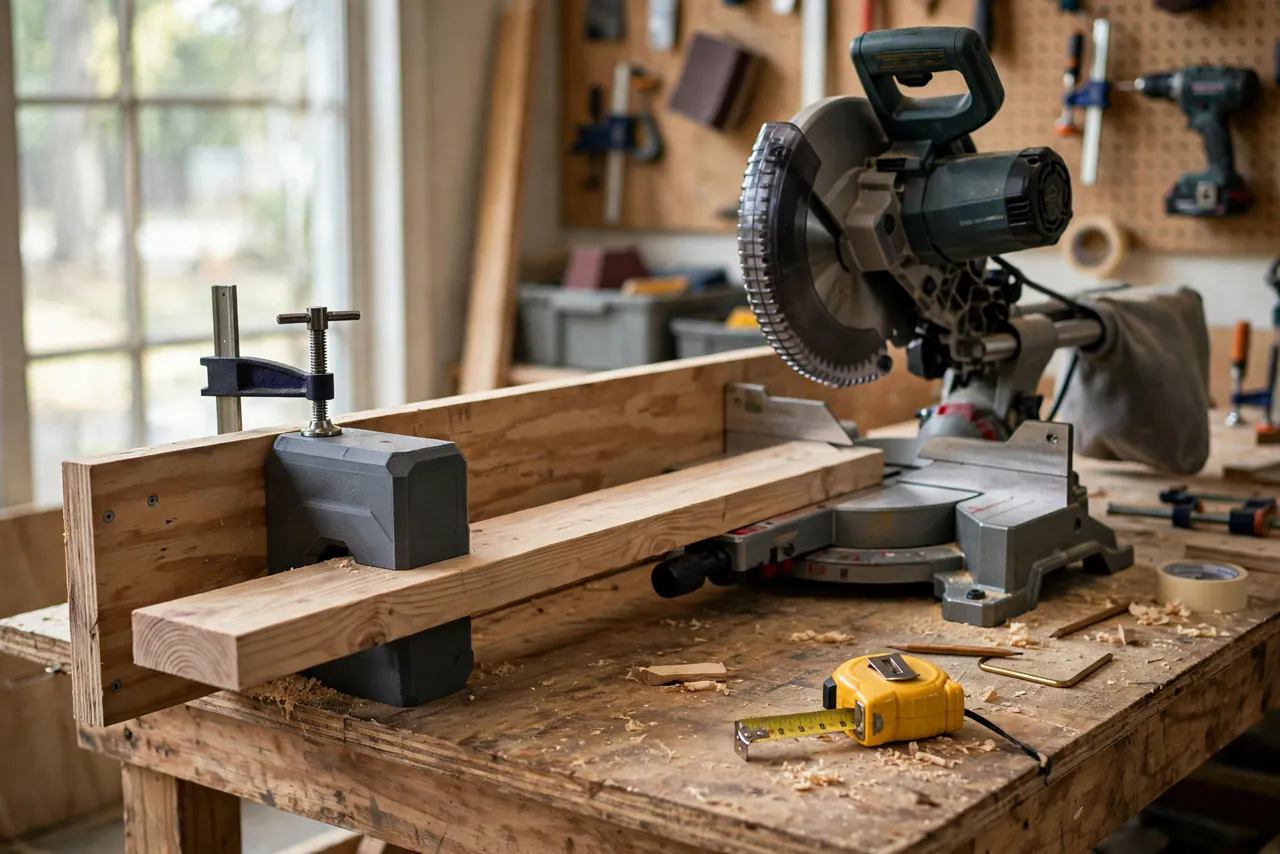
A bright home workshop scene with a miter saw on a workbench

Introduction Repeat cuts are where tape measures betray you. You measure 400 mm, mark it, cut it — then measure again for the next piece, and the mark lands half a millimeter differently. Over ten pieces, that drift adds up to a visibly uneven run of balusters, drawer parts, or trim. A length stop system … Read more

3D Printed Small Parts Crosscut Sled: Cut Tiny Pieces Safely on the Table Saw

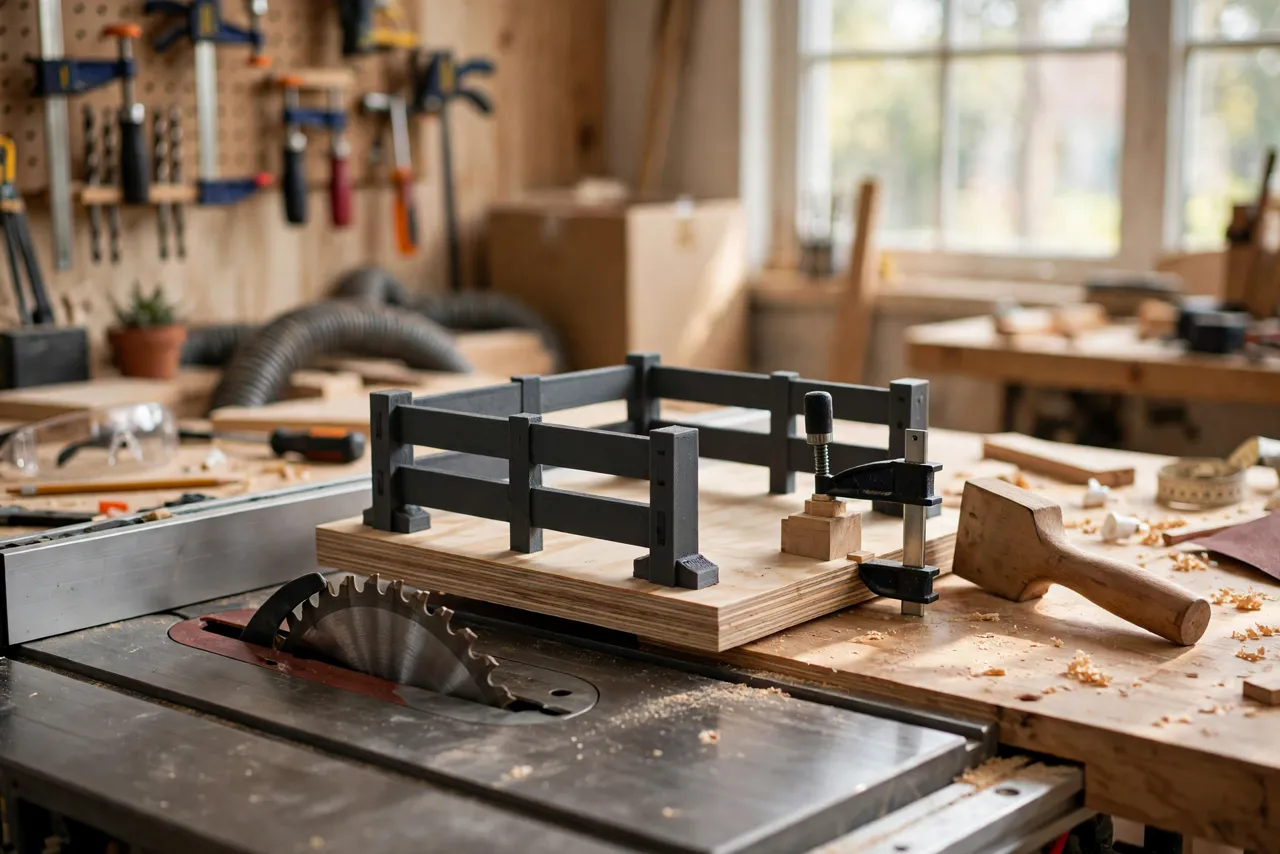
A bright home workshop scene with a table saw

Introduction Small parts are the most dangerous cuts on a table saw. A piece too short to hold safely, too narrow to keep clear of the blade, and too easy to kick back is a combination every woodworker dreads — and yet small parts are exactly what repairs demand: drawer dividers, inlay pieces, spacers, and … Read more

3D Printed Door Casing Reveal Gauge: Consistent Reveals Around Every Door

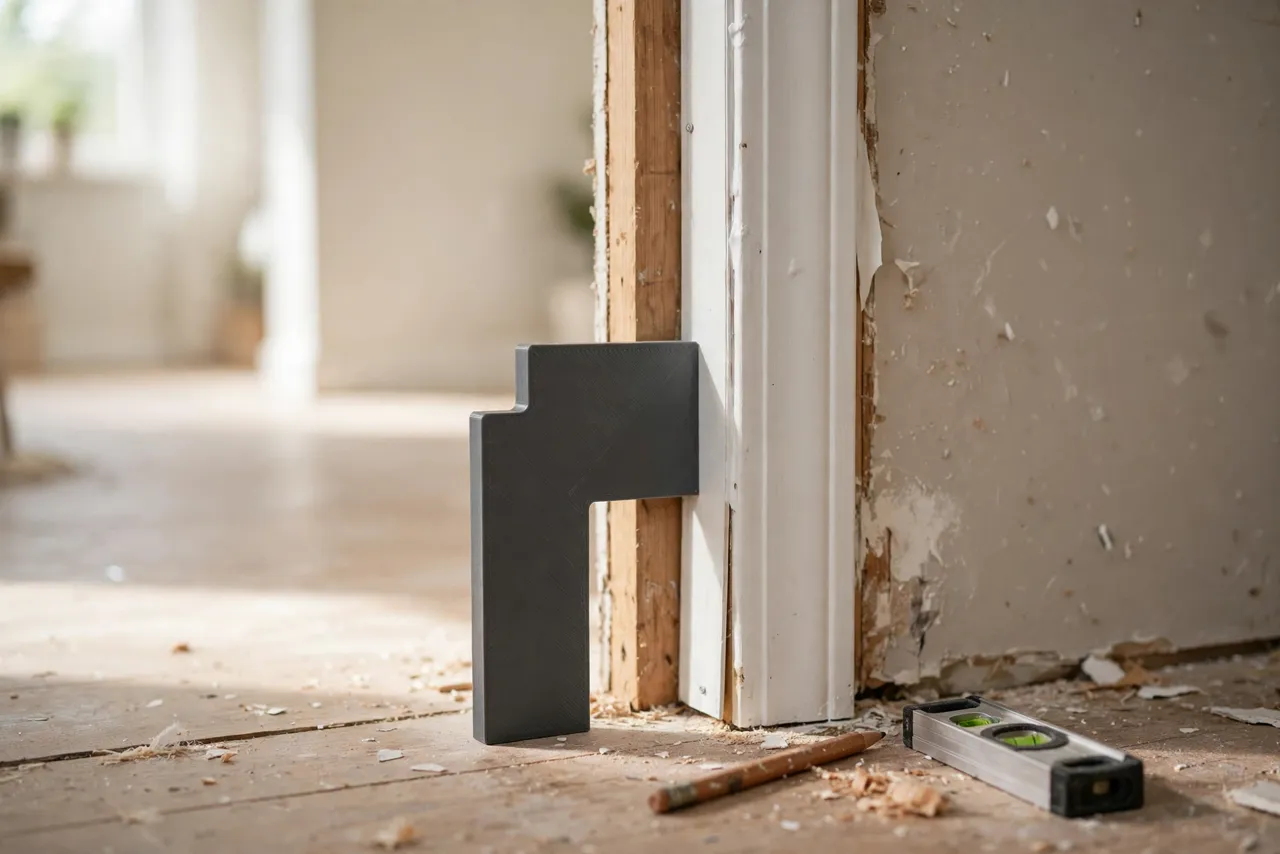
A bright home interior doorway with white door casing partly installed

Introduction The reveal is the small strip of door jamb left visible between the edge of the jamb and the edge of the casing. It is usually only about 5 to 6 mm wide, and it is one of the first things the eye checks on a finished doorway. When the reveal is even all … Read more

3D Printed Wainscot Panel Spacing Jig: Even Panels Without Measuring Twice

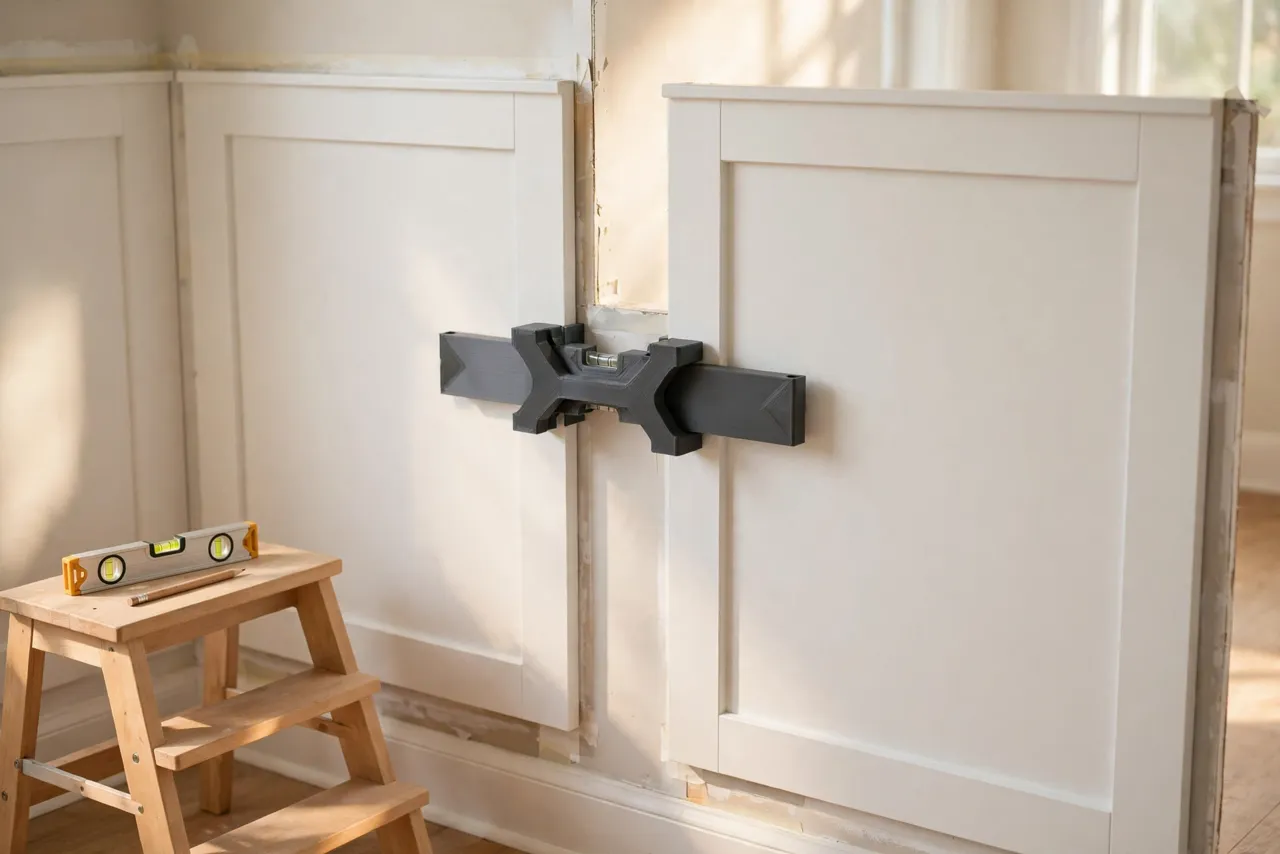
A bright home interior wall with white wainscot panels partly installed

Introduction Wainscoting looks simple until you lay out the first wall. You measure, mark, measure again — and somehow the last panel still ends up narrower than the rest, or the gaps drift a little wider as you cross the wall. The eye is ruthless about this: uneven panels are visible from the doorway, even … Read more

3D Printed Coping Template for Baseboards: Cope Inside Corners Like a Trim Carpenter

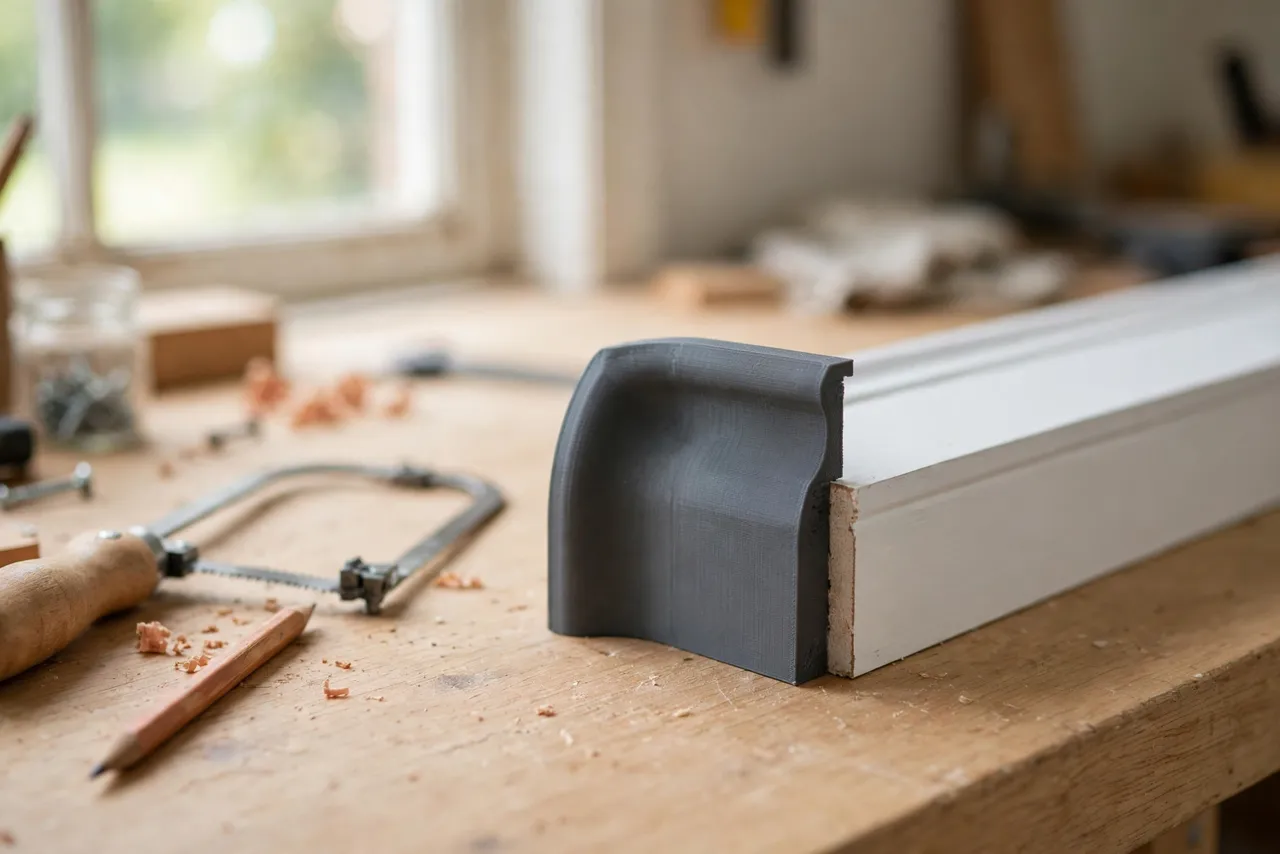
A bright home workshop scene on a light oak workbench

Introduction Inside corners are where baseboard jobs go wrong. Two boards cut at 45 degrees look perfect on the saw, then open up into a visible gap the moment the wall turns out to be 88 degrees instead of 90 — which, in most real houses, it is. Trim carpenters solve this with coping: one … Read more